
Top Video Marketing Platforms for B2B in 2026
Published on
January 21, 2026
Estimated reading time:
11
minutes
By Lorianna Sprague, Founder & CEO of UPFRONT MKTG
As we move into 2026, video has firmly established itself as a core component of B2B marketing strategy. Video is no longer confined to brand storytelling or awareness campaigns. It now plays a critical role in lead generation, sales enablement, product education, and customer engagement.
As a result, B2B teams need video marketing platforms that do far more than simply host high quality videos. Today’s platforms must support the entire lifecycle of video marketing - from video creation, video edits, and video production to distribution, audience engagement, analytics, and measurable business impact. Increasingly, these platforms must also support real time insights, flexible video players, and the ability to optimize your videos across marketing campaigns and channels.
I’ve worked with marketing teams at different stages of video maturity, and one pattern is consistent: the most successful teams choose platforms based on how well they support long-term strategy, not just immediate needs.
Below are some of the strongest video marketing platforms for B2B companies in 2026, evaluated against the criteria that matter most - performance measurement, scalability, integrations, and the ability to turn video content into measurable outcomes. This post is a deep dive into the platforms themselves. I discuss how to choose a video marketing platform in a separate post.
What is a video marketing platform?
For alignment on this topic, a video marketing platform is a tool that helps teams create, host, distribute, embed videos, and measure video performance across marketing, sales, and customer channels.
Unlike a basic video hosting platform, video marketing platforms include analytics, audience engagement tracking, video views and watch time reporting, lead capture forms, and integrations with CRM and other marketing tools - allowing teams to connect video performance directly to business outcomes.
What B2B Teams Should Expect From Video Marketing Platforms in 2026
Before diving into specific platforms, it’s worth clarifying what “best” actually means in a modern B2B context. In 2026, leading video marketing platforms should support:
- Hosting and delivering high quality videos at scale
- Advanced audience engagement metrics such as watch time and drop-off analysis
- Tools for lead generation, including lead capture forms and CTAs
- Easy ways to embed videos across websites, landing pages, and emails
- Integration with CRM, marketing automation, and analytics tools
- Support for live streaming, virtual events, and interactive video
- Scalability as video production and content creation increase
- Tools to support video messaging, explainer videos, product demos, and videos product education across the funnel
- The ability to optimize your videos for different target audience segments and marketing campaigns
With that foundation in mind, here are the platforms B2B teams most often consider - and why.
1. Vidyard - Best for Enterprise-Level B2B Engagement
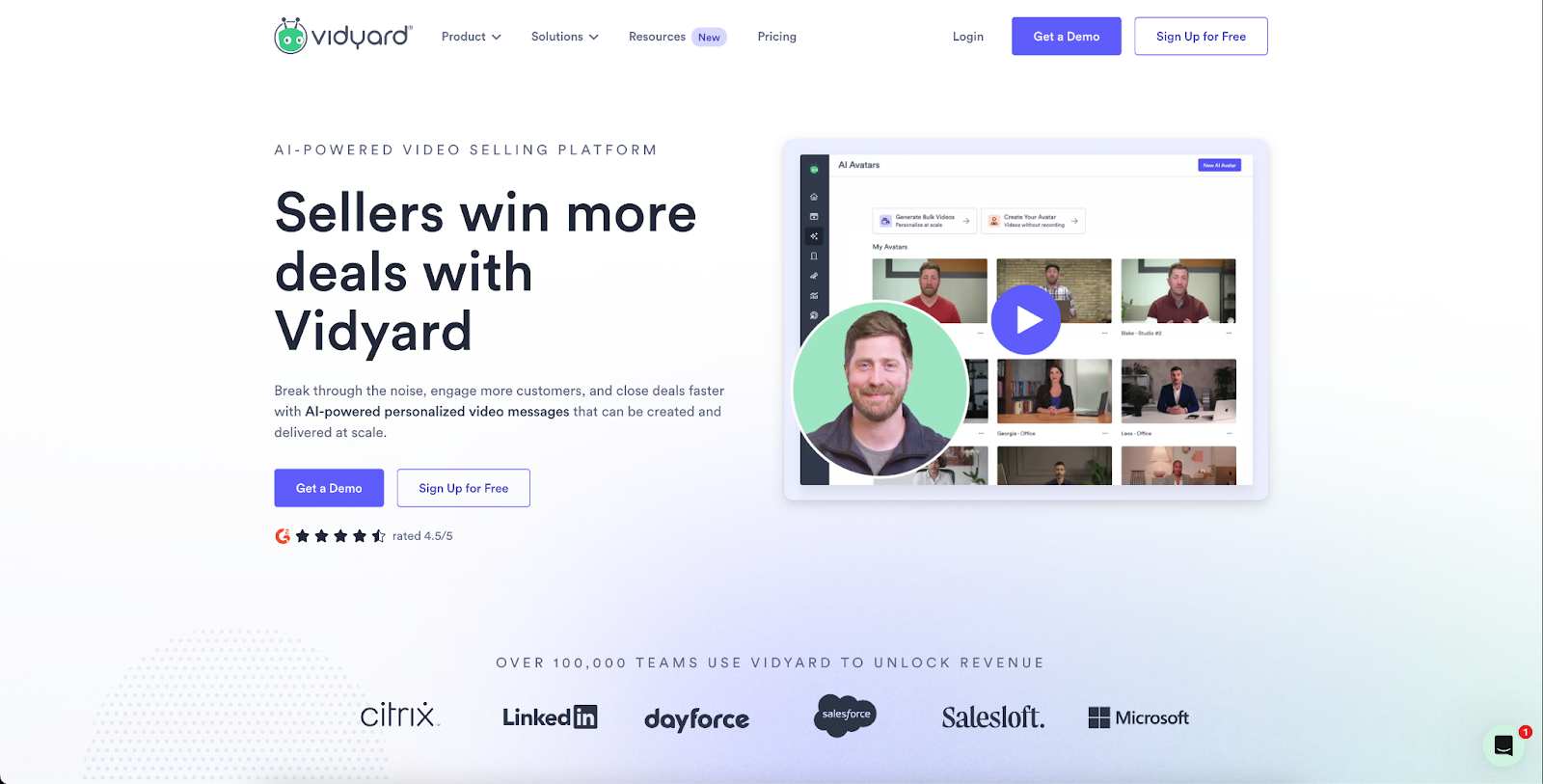
Vidyard’s customer base surpassed 250,000 companies, with more than 12.5 million users across those companies, according to a company press release from 2022.
In 2026, Vidyard remains one of the most widely adopted video marketing platforms for B2B organizations that need deep performance insights and revenue alignment. It goes well beyond basic video hosting by offering detailed viewer analytics, CRM integrations, and tools designed to support both marketing and sales workflows.
From my experience, Vidyard is particularly effective for teams that want to treat video as a performance channel rather than a passive asset. Its strength lies in tying video performance directly to pipeline and revenue outcomes.
Vidyard is also frequently used for video messaging in sales and customer outreach, enabling teams to share videos in a more personal, direct way while still tracking video views and engagement in real time.
Why Vidyard Stands Out
- Enterprise-grade analytics tied to pipeline and account activity
- Strong support for personalized video creation and sharing
- Seamless integration with CRM, marketing automation, and sales tools
- Well-suited for sales enablement, demand generation, and interactive video workflows
Vidyard is especially valuable for teams that embed videos into outbound sales outreach, nurture campaigns, and account-based marketing programs, while closely tracking audience engagement and conversion behavior.
Best fit for: Mid-market and enterprise B2B teams focused on revenue attribution, sales alignment, and scalable video marketing strategy.
2. Wistia - Best for Brand-Controlled Video Marketing

Wistia is another leading video marketing platform designed specifically for B2B teams. It is particularly well-suited for organizations that prioritize brand consistency, content performance, and detailed engagement analytics across owned channels.
According to BuiltWith usage data, over 128,000 live websites currently use Wistia for video hosting (with additional historic usage on hundreds of thousands of sites).
Wistia’s approach to analytics makes it easier for teams to understand how viewers interact with video content over time, using engagement graphs and watch time data to refine messaging and creative decisions.
Why Wistia Stands Out
- Clean, brand-forward video hosting platform
- Detailed audience engagement graphs and heatmaps
- Built-in lead capture forms and conversion tracking
- SEO-friendly structure for online videos and embedded content
Wistia is particularly effective when video content is embedded directly into landing pages, where engagement data can be used to optimize your videos for conversion. Marketing teams often use these insights to refine explainer videos, product demos, and mid-funnel content tied to specific target audiences.
Wistia is often a strong choice for marketing teams that rely heavily on video across websites, landing pages, and content hubs, and want tight control over how video supports broader content creation and lead generation efforts.
Best fit for: B2B marketing teams focused on brand experience, owned-channel performance, and optimizing video content for conversion.
3. Vimeo - Best for Flexible Video Hosting and Distribution
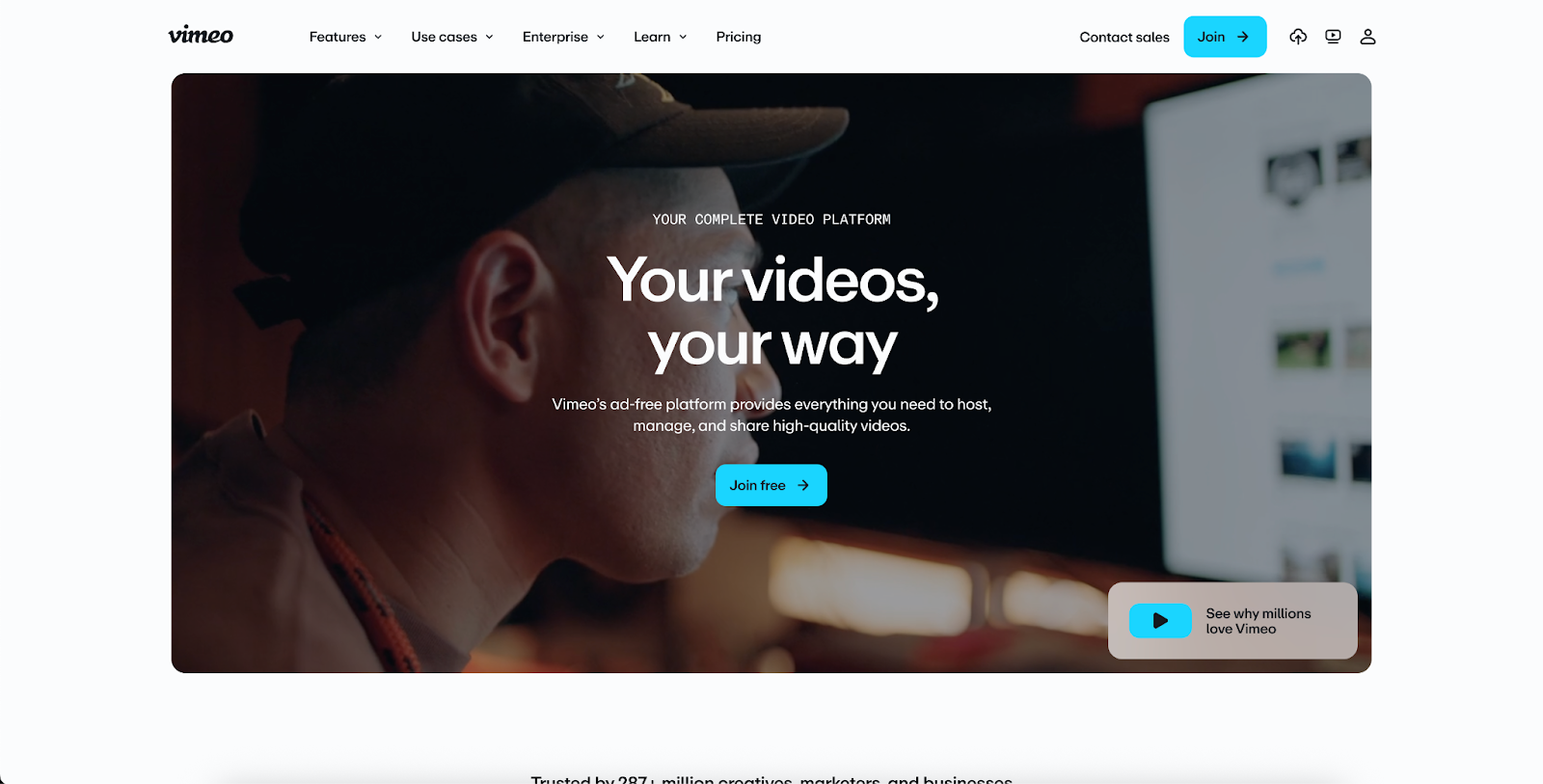
Vimeo has 1.6 million users globally as of 2021, according to CNN, is now up to 2,088,879 according to BuiltWith usage statistics, making it a widely adopted online video platform beyond purely marketing use.
Recently (Nov 2025) acquired by a Milan-based mobile app developer, Bending Spoons, Vimeo continues to be one of the most versatile video hosting platforms available. While it is not as specialized for B2B analytics as Vidyard or Wistia, Vimeo’s strength lies in its flexibility, creative tools, and reliable delivery of high quality videos.
Many teams use Vimeo as a foundational video hosting platform, particularly when video production volume is high and content needs to be shared across multiple channels. Its ecosystem often pairs well with video editing tools, video editors, and drag and drop workflows that support efficient video creation and video edits.
Why Vimeo Stands Out
- Reliable, scalable video hosting platform
- Support for live streaming and virtual events
- Easy ways to embed videos across websites, landing pages, and emails
- Strong creative and post-production tools
For teams that prioritize video creation and distribution first - and layer analytics or lead generation tools separately - Vimeo remains a compelling option.
Best fit for: Teams with high video production output that need dependable hosting, creative flexibility, and broad distribution capabilities.
4. Brightcove - Best for Large-Scale Enterprise and Streaming Workloads
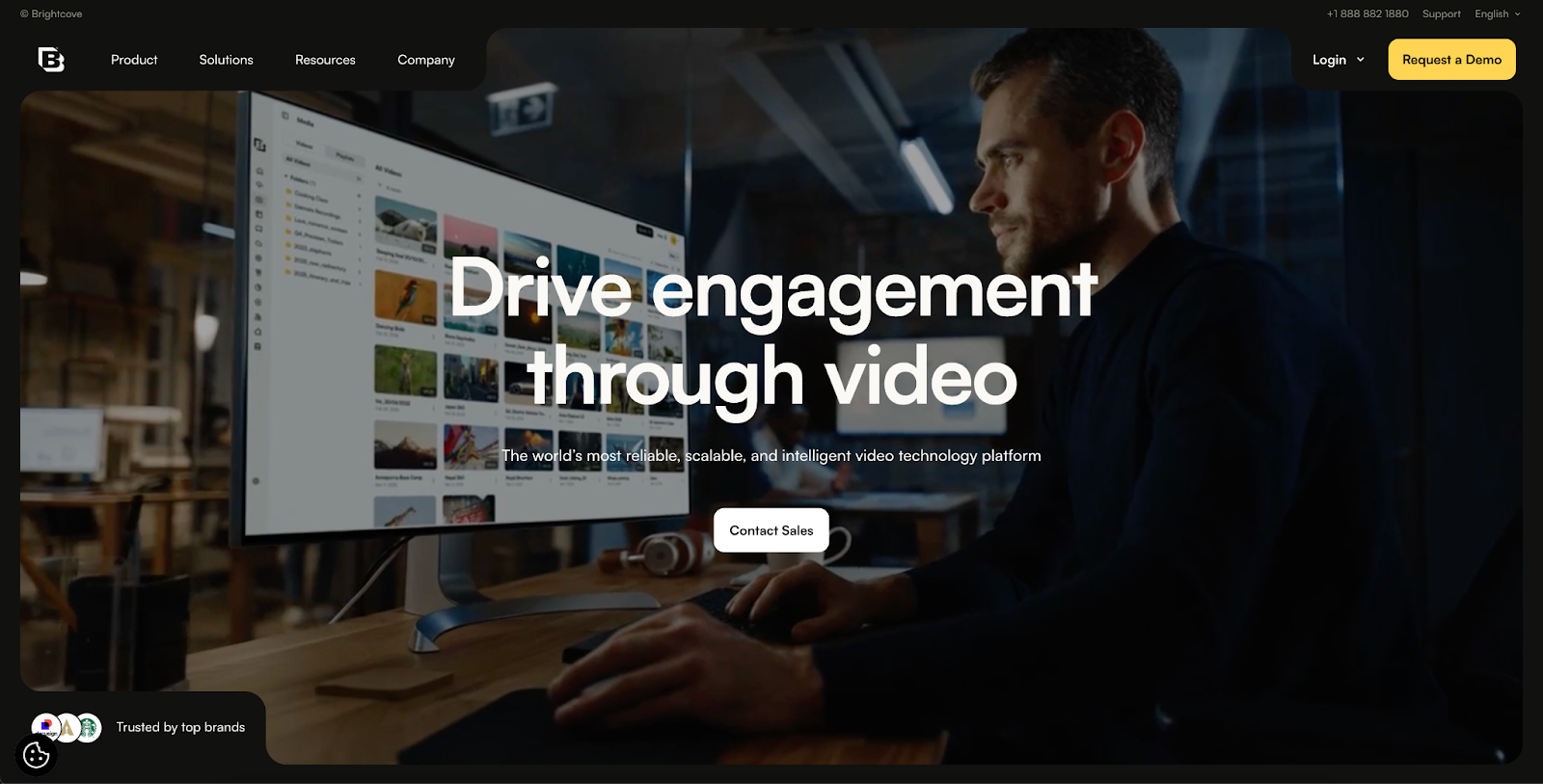
Brightcove is a long-standing enterprise video marketing platform built for organizations with complex requirements, large audiences, and global distribution needs. While public figures for Brightcove’s total users or customer count are not readily published, usage data from third-party technology trackers finds hundreds of companies in their installed base (e.g., 465+ companies detected using Brightcove technology).
It is particularly strong in environments where live streaming, large content libraries, and governance are critical.
Brightcove’s strength lies in managing video performance at scale, with real time delivery, governance, and analytics designed for organizations with complex operational requirements. While Brightcove can be more robust and more resource-intensive than other platforms, it excels at scale.
Why Brightcove Stands Out
- Enterprise-grade scalability and performance
- Advanced live streaming and CDN support
- Comprehensive media management for large video libraries
- Strong governance, security, and access control
Brightcove is often the right choice for organizations that manage extensive video ecosystems across departments, regions, or customer segments.
Best fit for: Large enterprises with complex streaming needs, global audiences, or high governance requirements.
5. YouTube (Business and Brand Channels) - Best for Broad Discovery
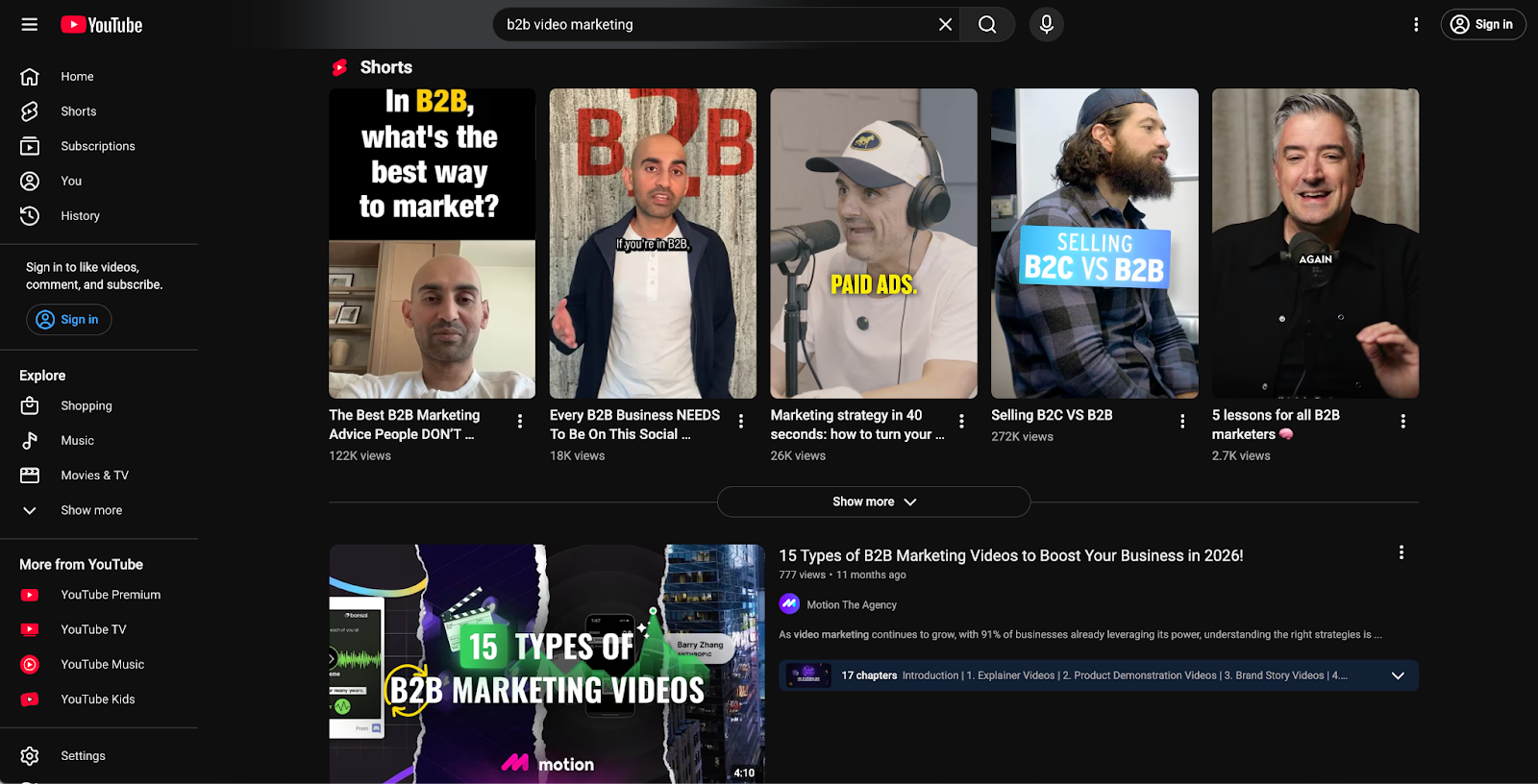
YouTube remains one of the world’s largest video platforms with approximately 2.7+ billion monthly active users globally, according to Statista.
While YouTube is not a traditional enterprise video marketing tool, it remains a critical component of many B2B video strategies due to its unmatched reach and discovery capabilities.
YouTube excels at top-of-funnel visibility and organic discovery for online videos, making it a valuable complement to analytics-focused video marketing platforms.
Why YouTube Stands Out
- Massive audience and search-driven discovery
- Easy sharing across social media platforms such as LinkedIn, X, and other distribution channels where online videos support brand awareness and early-stage audience engagement
- Low barrier to entry for publishing and distributing video content
- Works well in hybrid strategies where deeper engagement tracking happens elsewhere
For many B2B teams, YouTube functions best as a distribution and awareness channel, while primary video marketing platforms handle lead generation, audience engagement, and performance measurement.
Best fit for: Teams focused on reach, awareness, and discoverability as part of a broader, multi-platform video marketing strategy.
Comparison Table: Video Marketing Platforms by B2B Use Case
Video Marketing Platforms Comparison (B2B, 2026)
Many B2B teams use a hybrid approach, combining a primary video marketing platform with YouTube or social media platforms for discovery.
Bonus Considerations: Emerging Tools and Hybrid Approaches
Depending on your organization’s goals, there are additional video marketing tools worth exploring. These include:
- Interactive video platforms that enable clickable experiences and dynamic CTAs
- AI-powered tools that assist with video creation, personalization, and optimization
- Social-first tools designed for short-form video on social media platforms
- Marketing automation extensions that enhance lead capture and attribution
Many B2B teams adopt a hybrid approach, combining a core video marketing platform with supplemental tools to support specific content creation or distribution needs. Examples include lightweight video editing tools to support quick video edits for marketing campaigns, social clips, and product-focused videos product teams need on short timelines.
How to Choose the Right Video Marketing Platform for Your Team
When evaluating video marketing platforms in 2026 and video marketing platform selection criteria, the most important step is alignment. The right platform should support your business goals, not just your current workflow.
Key evaluation criteria include:
- Audience engagement metrics such as watch time and drop-off analysis
- The ability to embed videos consistently across owned and paid channels
- Advanced lead capture forms and CRM integration for lead generation
- Support for high quality videos and live streaming
- Scalability as video production and content creation expand
The strongest platforms are those that grow with your team and evolve alongside your video marketing strategy. Here's some guidance based on different types of teams:
SaaS B2B Teams
SaaS teams often prioritize video marketing platforms that support lead generation, product education, and integration with marketing automation tools to support trial sign-ups and pipeline velocity.
Best fit platforms:
- Vidyard
- Wistia
- Vimeo (for product-led content)
Mid-Market B2B Teams
Mid-market teams typically need a balance between scalability and usability, choosing platforms that support video creation, analytics, and audience engagement without adding unnecessary complexity.
Best fit platforms:
- Wistia
- Vidyard
- Vimeo
Enterprise B2B Teams
Enterprise organizations often require video marketing platforms that support governance, security, live streaming, and global content distribution at scale.
Best fit platforms:
- Brightcove
- Vidyard
- Vimeo Enterprise
Final Thoughts
There is no single “best” video marketing platform for every organization. The best choice depends on how video supports your broader marketing, sales, and growth objectives.
As video continues to shape how B2B buyers discover, evaluate, and engage with brands, investing in the right platform is no longer optional. Choosing strategically in 2026 can help marketing teams avoid costly migrations, improve video performance, and turn video content into a measurable growth driver for years to come.
FAQ: Video Marketing Platforms for B2B
Q: What is the best video marketing platform for B2B in 2026?
A: The best video marketing platform depends on your business goals. Vidyard excels at revenue attribution and sales enablement, Wistia supports brand-led lead generation, Vimeo offers flexible video hosting and live streaming, and Brightcove is built for enterprise-scale video operations.
Q: Are video marketing platforms better than video hosting platforms?
A: Video marketing platforms provide deeper analytics, audience engagement tracking, and lead generation tools, while video hosting platforms primarily focus on storing and delivering video content.
Q: How do B2B companies measure video marketing ROI?
A: B2B teams measure ROI using metrics such as watch time, engagement rate, lead capture, pipeline influence, and revenue attribution - metrics typically supported by video marketing platforms.
Q: How can B2B teams optimize video performance across campaigns?
A: Teams can optimize video performance by analyzing video views, watch time, and audience engagement data, then refining video messaging, placement on landing pages, and distribution across social media platforms to better reach their target audience.

Author:
Lorianna Sprague
Lorianna Sprague is the Founder & CEO of UPFRONT MKTG, a full-service marketing and web development agency based in Lancaster, Pennsylvania. With over a decade of experience in SEO, YouTube SEO, and content strategy, Lorianna helps brands translate analytics into actionable marketing systems that drive measurable growth - from YouTube marketing and digital storytelling to landing page optimization and product page performance.


Gorilla Creative is a full service corporate video production company located in San Francisco, California.
hello@gorillacreative.com | (415) 907-4427 | 535 Mission St, Floor 14, Suite 1681, San Francisco, CA 94105
© 2026 Gorilla Creative. All rights reserved. Privacy Policy