
How to Get More Views on YouTube in 2025
Published on
November 16, 2025
Estimated reading time:
10
minutes
A Strategic Guide for Business Owners and Marketing Teams
By Lorianna Sprague, Founder & CEO of UPFRONT MKTG
For many businesses, YouTube represents one of the most underused yet potentially impactful marketing platforms.
Your company may have spent a lot on creating videos. These could include a brand story, product demos, or a short educational series. Your team uploads them to your channel, waits, and the results are disappointing. You only see a few YouTube views, and your videos aren’t appearing where you expected.
If that sounds familiar, you’re not alone.
I began my career in SEO. Later, I expanded into all areas of marketing, working both in-house and with agencies. Over time, I’ve seen this same challenge surface across nearly every industry, from professional services to e-commerce.
The issue usually isn’t production quality or messaging. It’s that the business hasn’t aligned its content strategy with how YouTube’s ecosystem and its viewers actually behave.
In this guide, I’ll walk you through how to get more views on your YouTube videos pulling nuggets from my own experiences and a combination of sources, including:
- Google’s official recommendations from YouTube’s Help Center
- Expert SEO insights from Backlinko
- Community feedback from r/NewTubers, tailored for marketing leaders and business owners
This guide explains how to turn your business' video content into a powerful brand visibility tool that attracts your target audience, supports your products or services, and builds measurable impact over time.
1. Treat YouTube Video Titles and Thumbnails Like Ad Creative
Your video title and thumbnail are the headline and banner ad for your video. They determine whether someone clicks or scrolls past.
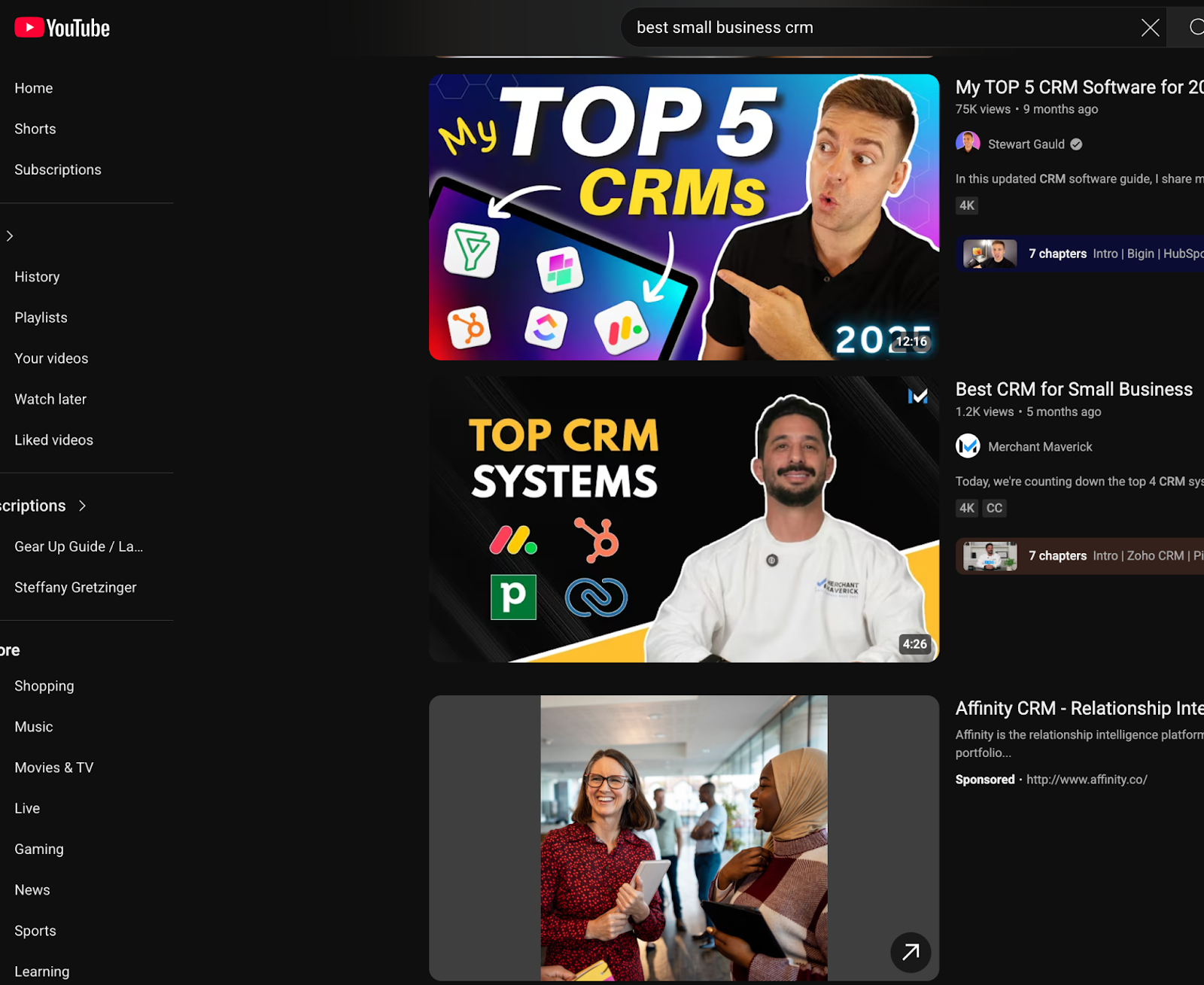
Data from Backlinko and HubSpot shows that a great YouTube video title can increase clicks by up to 30%. Their research also highlights the BOGY color formula (Blue, Orange, Green, Yellow) for thumbnails, since these colors contrast YouTube’s red and white interface.
For your marketing team:
- Think of your title as an ad headline. It should communicate value (“how,” “why,” or “what’s in it for me”) while naturally including your long-tail keywords.
- Use brackets or parentheses like “[Step-by-Step]” or “(2025 Edition)” to make your video stand out.
- Keep video titles within 40–50 characters to optimize for both desktop and mobile.
- Test different thumbnail versions and maintain a cohesive brand look across your channel.
- Make sure your type of content delivers on the title’s promise within the first 10 seconds.
If your company treats every upload like an ad campaign, your videos will start performing like one.
2. Align Video Topics With Audience Demand
One of the biggest mistakes I see in corporate YouTube strategies is publishing the content your business wants to talk about, rather than what your potential customers are actually searching for.
If you're uploading something that just isn’t popular … it’s most likely not gonna perform. — r/NewTubers
Before creating your next video, take your team through a keyword research tutorial and learn to data-mine search queries for topics. Better yet, partner with an experienced SEO strategist or agency that understands both YouTube SEO and your business goals.
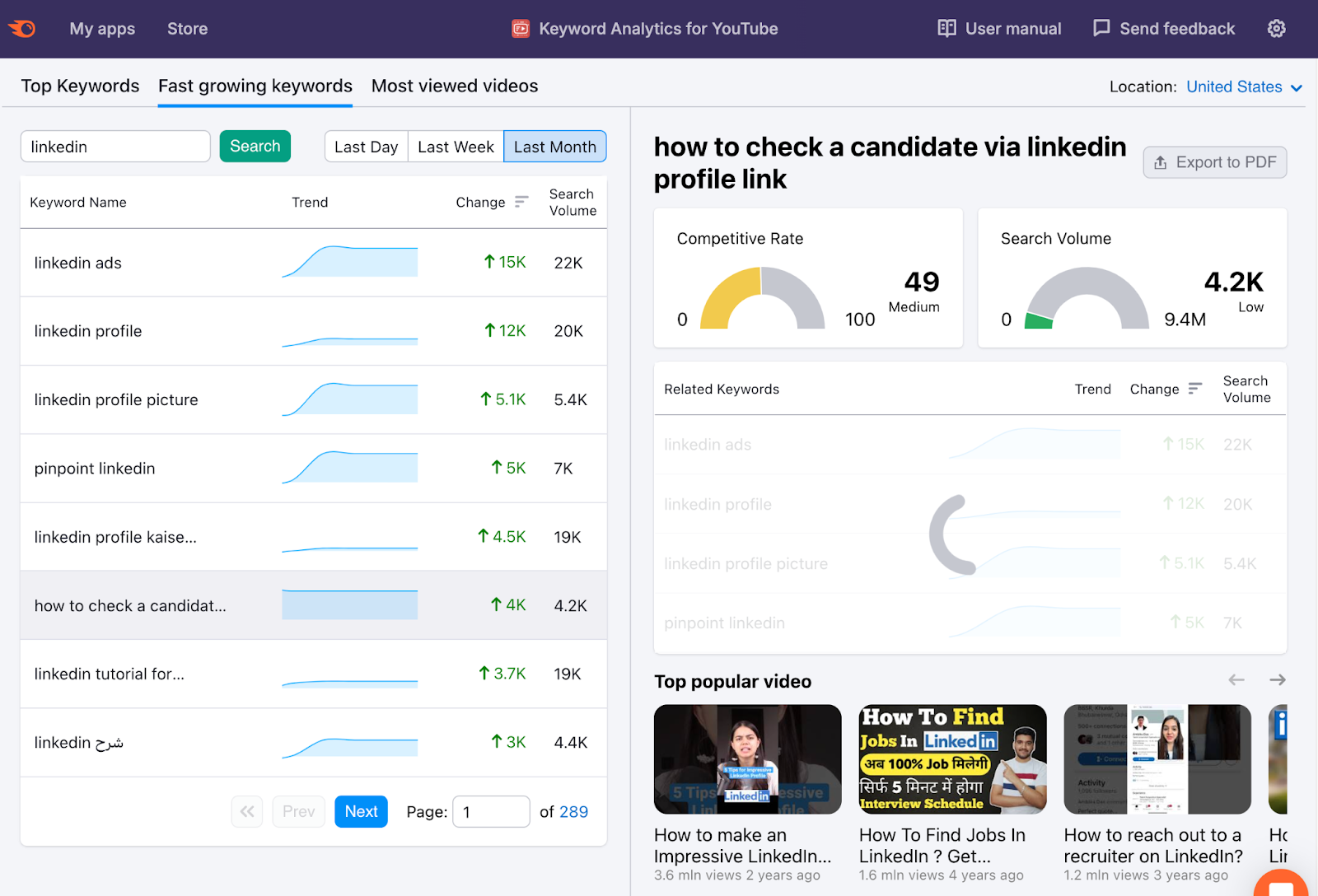
An SEO strategist will use advanced keyword research tools like SEMrush, Ahrefs, or Google Keyword Planner to uncover not just what people are searching for, but why. They can then build a video topic calendar that aligns your type of content with both your company’s messaging and your audience’s intent. The result is a channel that supports your broader content strategy while meeting real audience demand.
Here’s a simple framework that works for both internal teams and agencies:
- Audience Research: Dive into search query reports from Google Search Console, or a paid keyword research tool. Find informational queries with meaningful monthly volume that are about your products or services.
- Competitor Research: Enter your chosen topics into Youtube to find the top ranking videos, with the most likes and engagement, for those queries.
- Analyze: Note which videos rank highly and how they’re titled. Those represent real search demand and viewer interest.
- Refine: Filter down to long-tail keywords (phrases that often have lower volume but higher intent) such as “best CRM for nonprofits 2025”.
- Create: Develop video content that directly answers those specific questions with practical insights.
When this process is guided by an SEO professional, your videos on YouTube will appear where your target audience is already looking for help, not where you simply hope they’ll find you.
3. Focus on Watch Time and Session Time, Not Just Clicks
A click gets someone to your video. Watch time keeps them there.
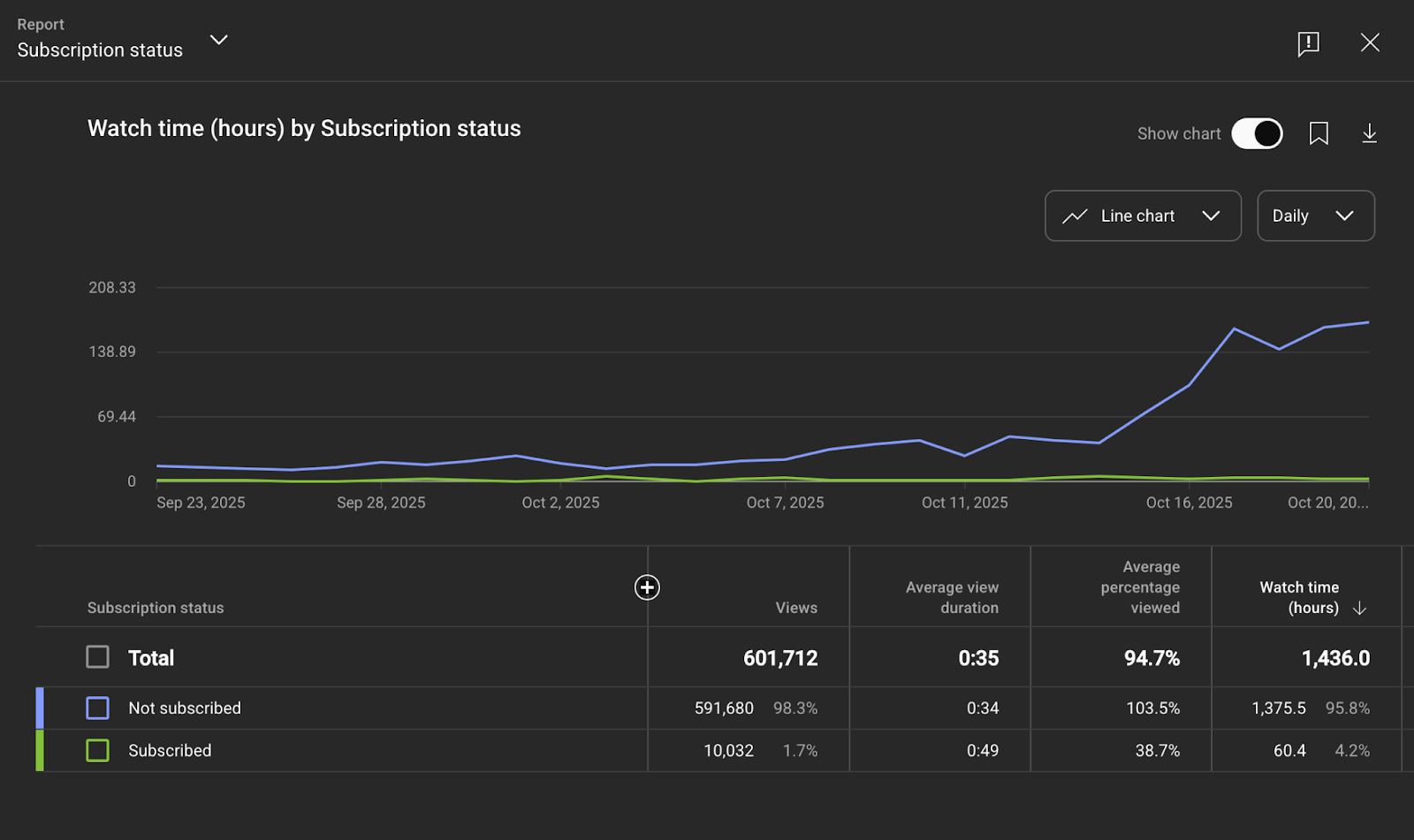
YouTube’s algorithm rewards videos that hold viewer attention and encourage users to keep watching - especially if they continue with another one of your videos. We call this Session Time, which measures how long a viewer stays on YouTube after starting your content.
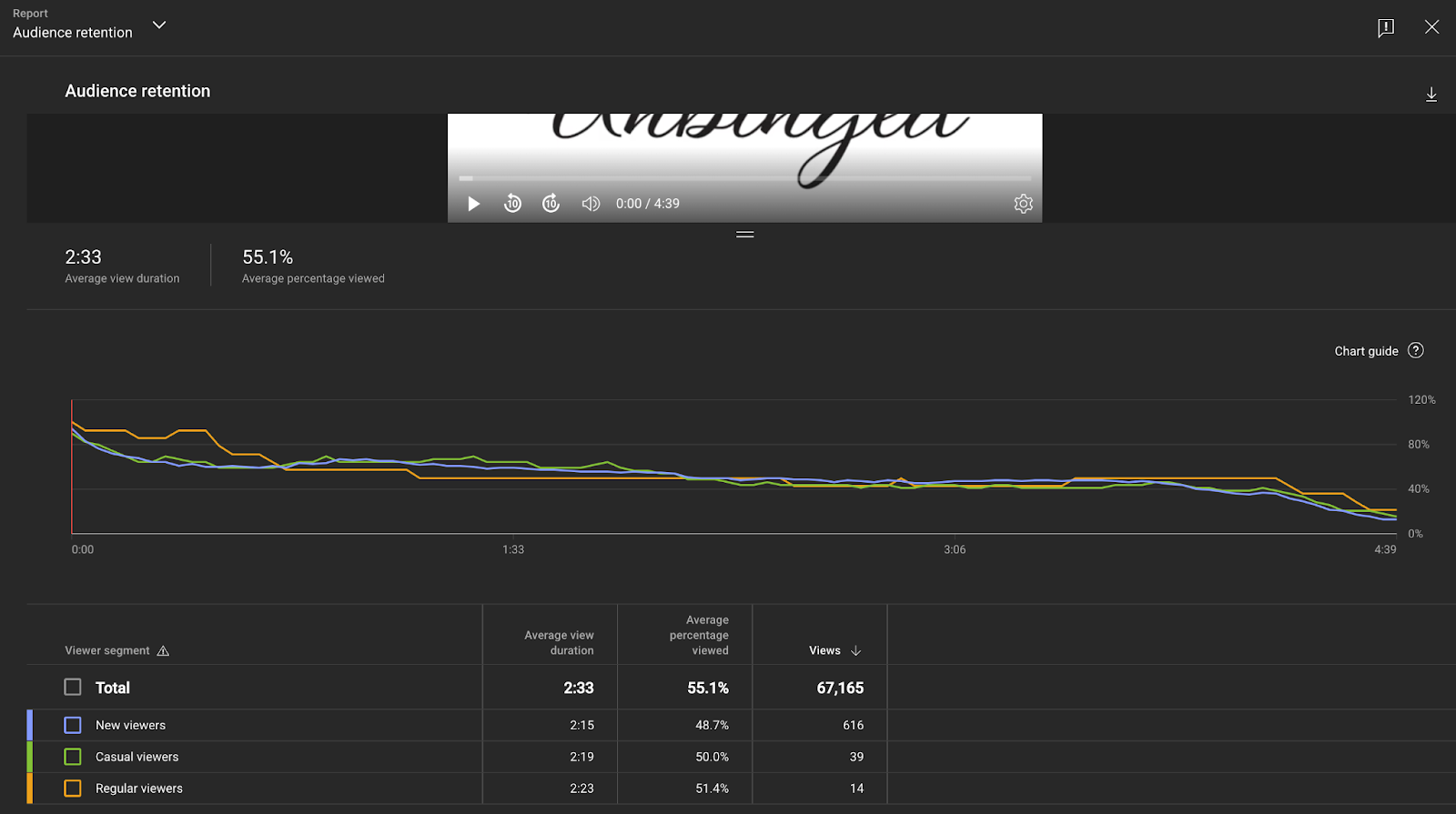
Strategies your marketing team can use:
- Edit tightly and remove filler or redundancy.
- Use pattern changes, visual cues, and graphics to maintain interest.
- Review retention graphs in YouTube Studio to identify drop-offs and adjust your structure.
- Implement the Card Bridge technique. Do this by adding an interactive card just before drop-off points to redirect viewers to another video.
- Include an outro that invites viewers to “watch next” or visit a landing page for related content.
Epicurious executes this well with two suggested videos showing at the end of their video:
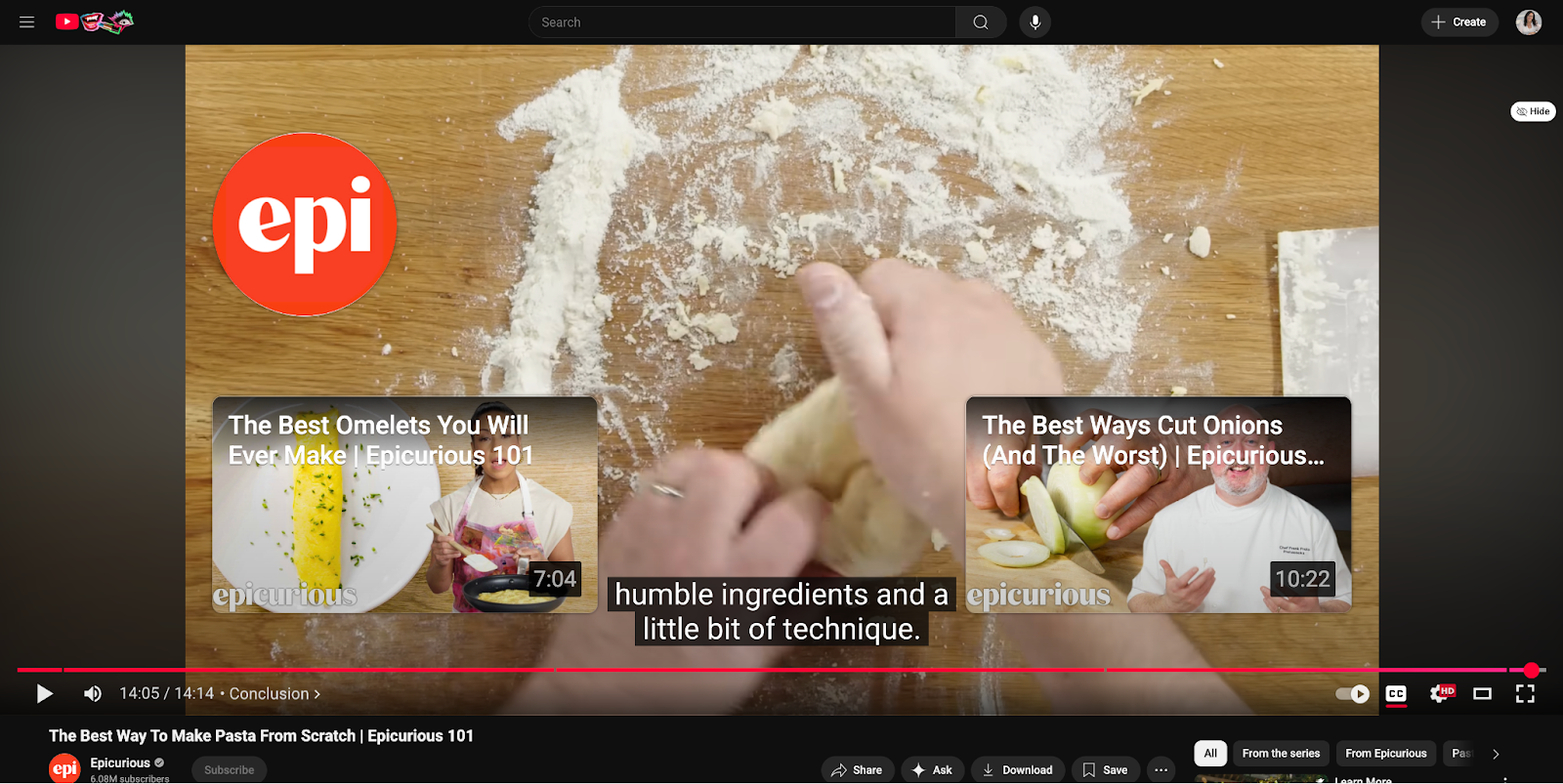
When both watch time and session duration improve, YouTube amplifies your videos in recommendations. This creates organic visibility that compounds over time.
4. Strengthen Metadata: YouTube Video Tags, Descriptions, and Captions
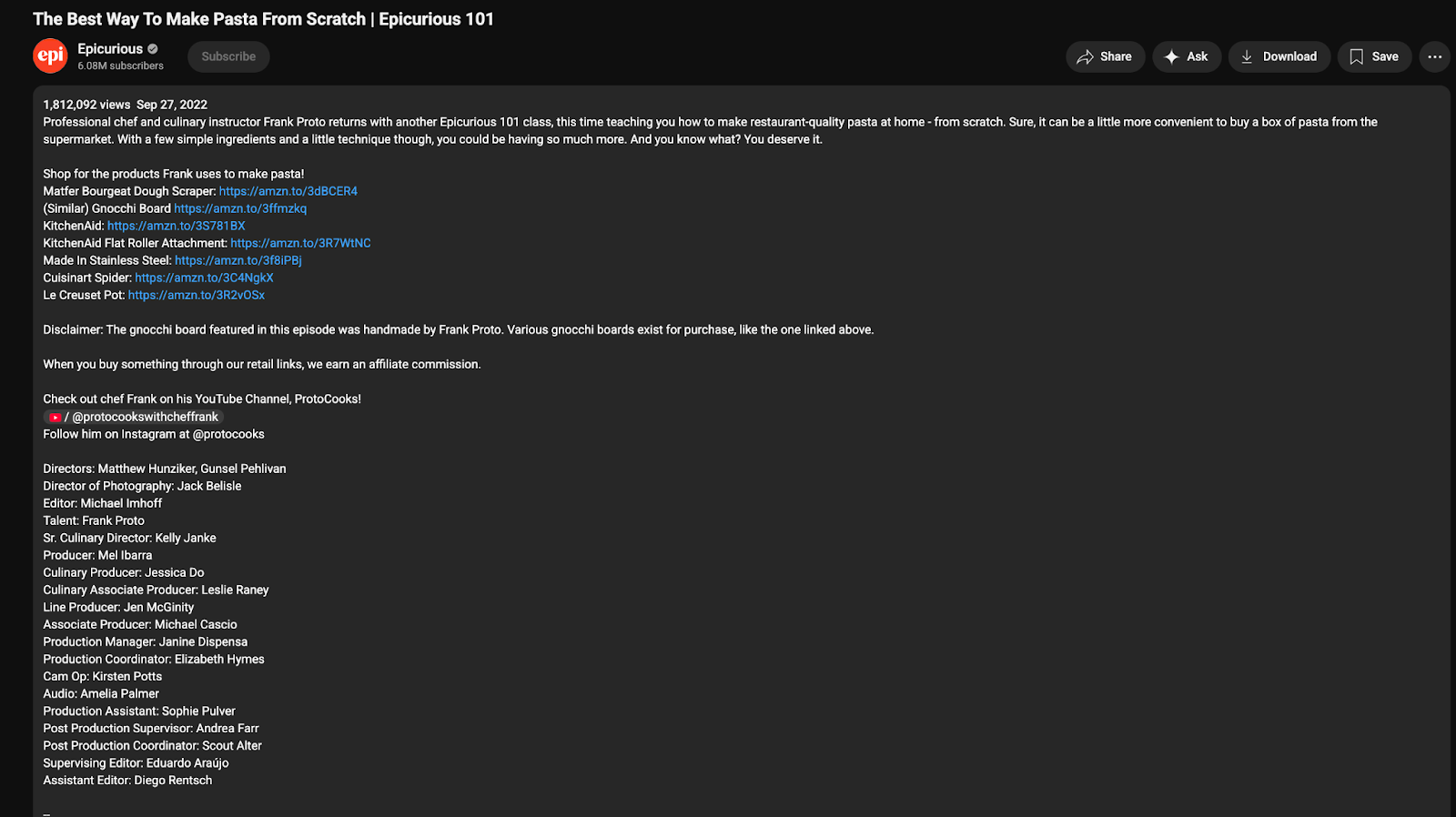
Metadata optimization is "on-page SEO" for YouTube. It helps your video content rank for relevant search queries and gives YouTube clear context about your topic.
Follow Backlinko’s recommended video description template:
- Begin with a keyword-rich introduction summarizing your video content.
- Add a short paragraph (100–150 words) describing what viewers will learn and why it’s valuable.
- Include links to landing pages, product pages, or blog posts that connect to the topic.
- End with a call-to-action like “Subscribe for updates” or “Learn more about our systems consulting services.”
When adding YouTube video tags, use the MVC framework:
- Main keyword (your primary search term)
- Variations (related terms and alternative phrasing)
- Category (broader topic or industry type)
Upload captions or full transcripts whenever possible. This improves accessibility and strengthens YouTube SEO because YouTube indexes every spoken word in your video.
Continuing with the Epicurious video example from the last section, their video meta data is perfectly set for success:
5. Make Engagement a Team Responsibility
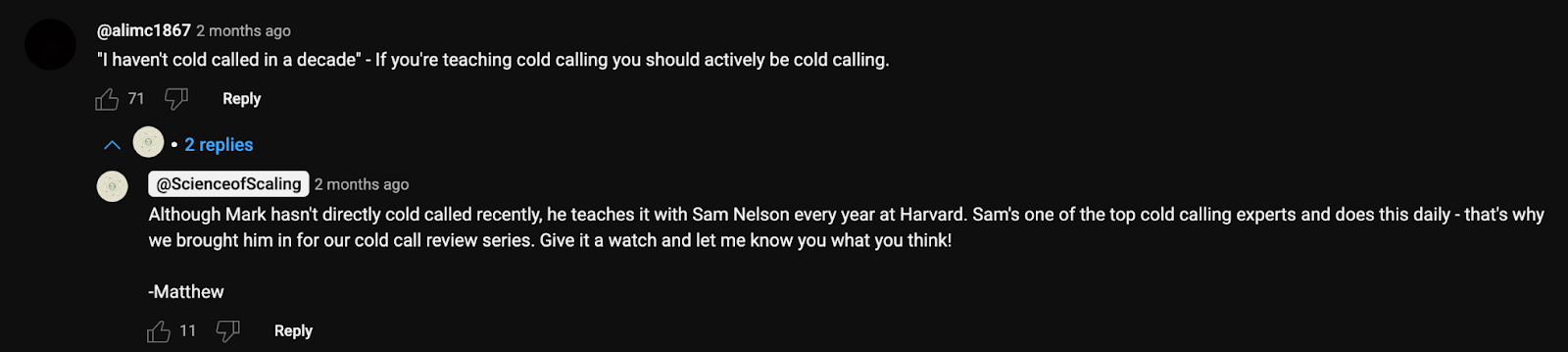
Speak directly to the YouTube community and ask them to subscribe… use playlists, comments, and end screens. — YouTube Help Center
Engagement isn’t optional; it’s a ranking factor. Brands that respond quickly and interact meaningfully build stronger audience trust. Here’s a great example from @ScienceofScaling on their video “How to Cold Call When 90% Hang Up (Live Role-Play)”
To operationalize engagement:
- Assign one team member to respond to comments daily.
- Use pinned comments to highlight CTAs or guide viewers to other videos on YouTube.
- Create playlists that align with different customer stages such as “Learn About Our Services,” “How-To Tutorials,” and “Customer Success Stories.”
- End your videos with a question that invites feedback and discussion.
A consistent engagement plan shows both the algorithm and your audience that your channel is active and invested.
6. Reach New Audiences Through Industry Engagement
All the top guys on YouTube in the genre are commenting on all their videos. That’s free promotion to the exact audience you want. — r/NewTubers
This is, perhaps, more of a guerrilla marketing tactic, but effective. Encourage your marketing or PR team to engage with other content creators in your industry. Commenting thoughtfully on relevant videos helps you “borrow” visibility from similar audiences.
For example, a construction firm could comment on an industry video about “2025 building trends” with insight based on its own experience. This demonstrates credibility and places your brand name in front of an audience of potential customers already interested in your field.
7. Launch Videos Like Campaigns, Not Posts
YouTube’s algorithm gives early traction significant weight. Treat every new upload like a campaign launch.
YouTube's homepage algorithm favors recently published and fast-performing videos. Early traction helps your video get featured. — Backlinko
How to build a launch plan:
- Promote your new video through your company’s email list and social media channels.
- Embed it in relevant blog posts and landing pages.
- Share teaser clips on LinkedIn, TikTok, Facebook, Instagram (you get the idea) to generate curiosity. Link to full video on YouTube using platform-appropriate techniques.
- Ask your internal team to engage during the first 24 hours to boost early metrics.
When your videos perform well early, YouTube’s recommendation system interprets them as valuable and expands their reach to new audiences.
8. Use Paid Distribution to Support Organic Growth
Get more views with YouTube Ads… use YouTube Studio or Google Ads. — YouTube Help Center
Paid campaigns can accelerate organic results when implemented strategically.
Start with a small, focused budget (around $5–$50 per day depending on business size, goals, etc.) to promote educational or high-value types of content such as case studies, how-to guides, or product demos.
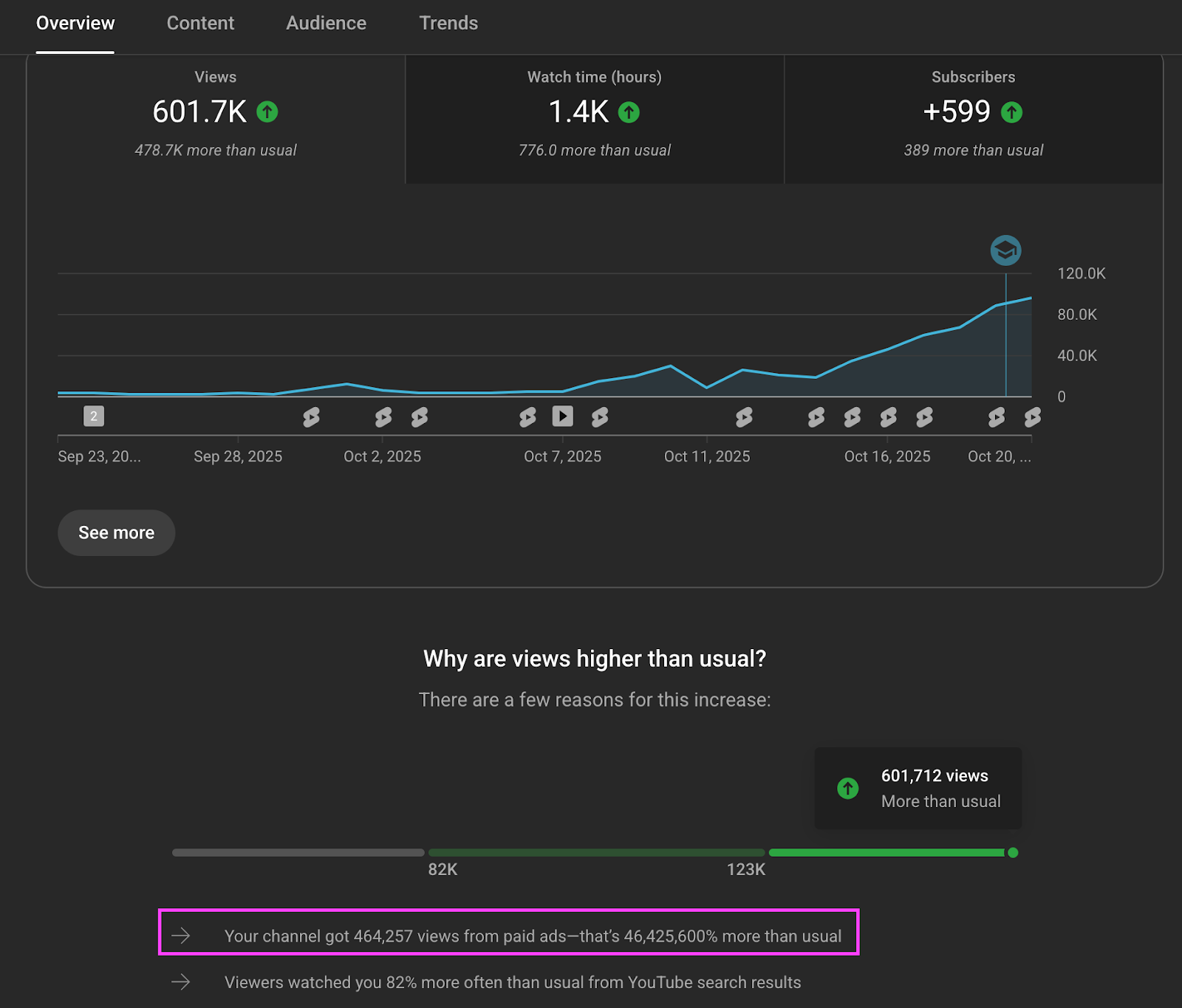
Evaluate performance based on the metrics that align with business goals:
- Watch time for brand engagement
- Click-through rate to landing pages for interest and relevance
- Conversions on product pages or contact forms for sales potential
Paid visibility can amplify your best-performing videos and give new uploads the traction they need to earn more organic reach.
9. Audit Performance and Repeat What Works
One of the best-kept secrets of YouTube success is simply to repeat what works. Backlinko calls this the “double down” strategy. It's also just common sense.
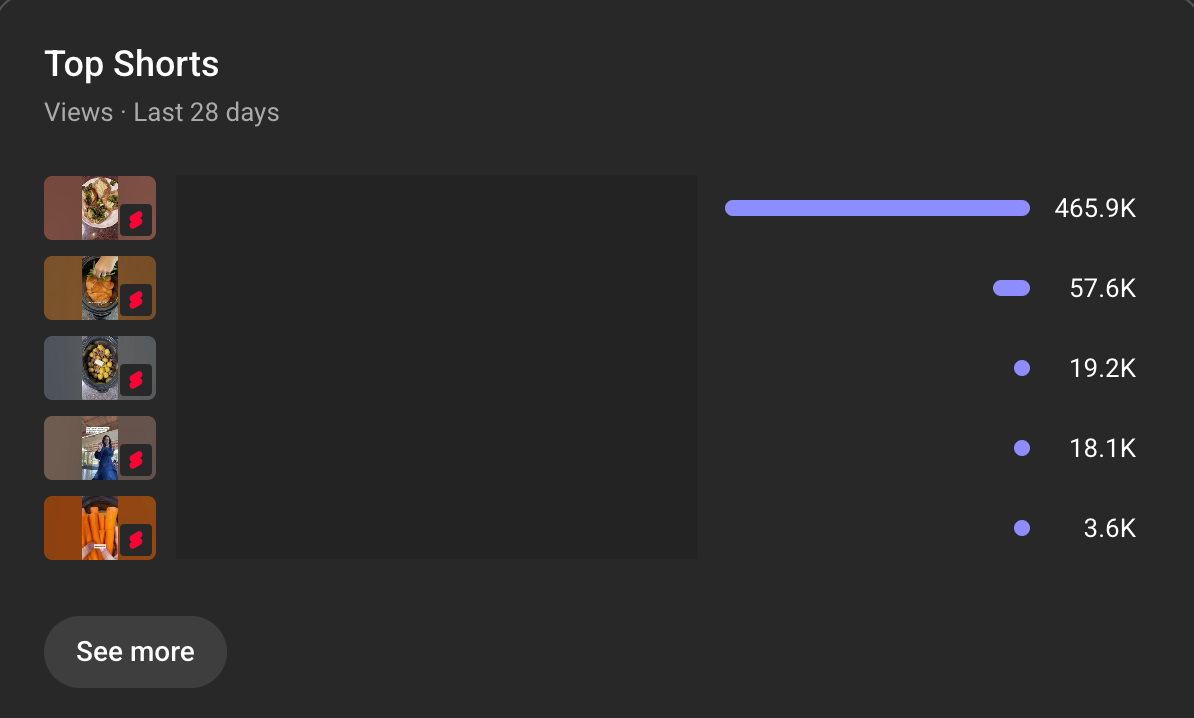
Review analytics to identify which videos outperform others. If a certain topic, tone, or video length consistently performs better, make more of it. For instance, if your “Marketing Automation Tutorial” has four times the average watch time, plan follow-up topics like “Keyword Research Tutorial” or “5 Automation Tools for Small Businesses.”
For the top performing short in the screenshot above, there was fantastic engagement and watch time, indicating this is a topic worth revisiting:
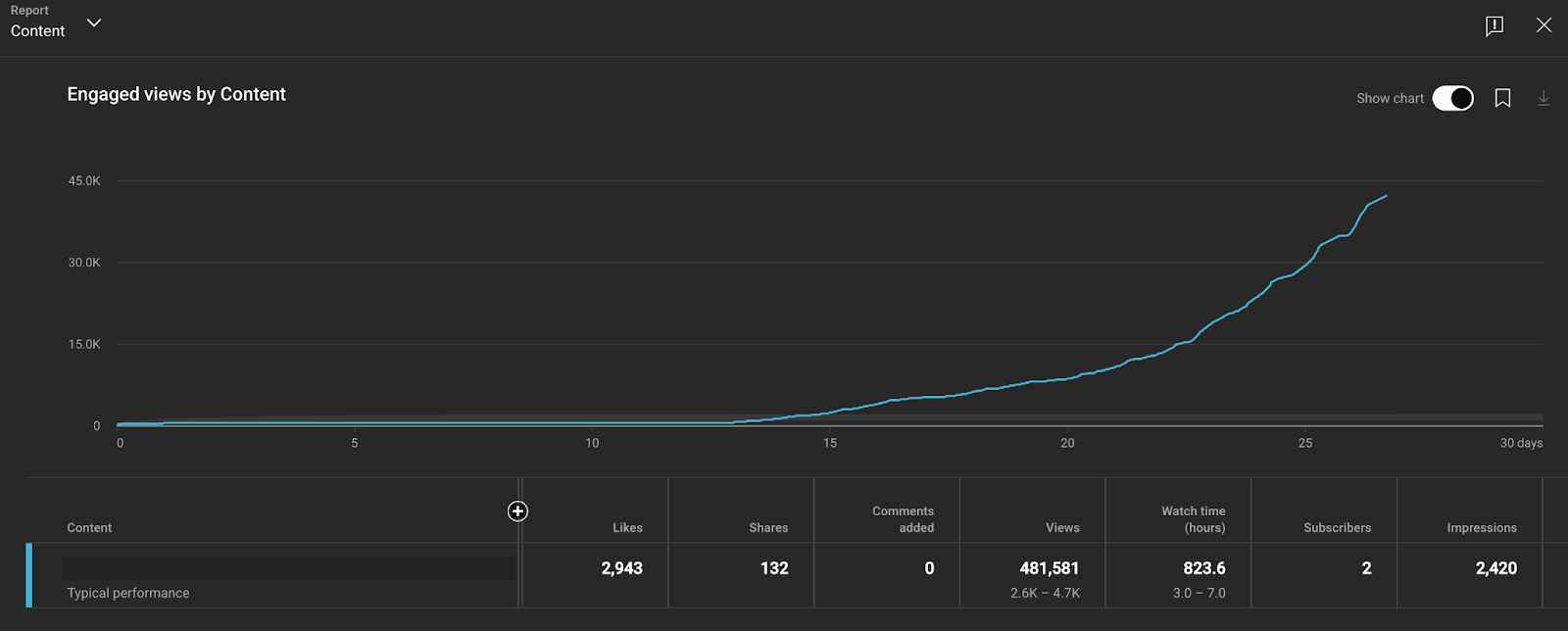
This data-driven approach transforms your channel from a guessing game into a reliable content creation system.
10. Commit to Consistency and Long-Term Growth
A successful YouTube strategy isn’t about perfection. It’s about persistence.
“Stop worrying about growth and views. Make a hundred videos first.” — r/NewTubers
YouTube rewards active, consistent channels. Even one quality video per week can outperform sporadic bursts of activity.
Develop a video calendar that integrates with your marketing efforts across email, blogs, and social. Align video content with campaigns, product launches, or seasonal trends.
Consistency builds audience expectation and establishes your brand as a trusted authority in your space.
The Strategic Takeaway
If your company’s YouTube channel isn’t performing, the issue likely isn’t your production quality - it’s your strategy.
The brands that grow on YouTube are the ones that:
- Treat video titles, tags, and descriptions as key SEO assets.
- Plan video topics using real search queries and audience data.
- Prioritize watch time and retention over vanity metrics.
- Encourage community engagement through consistent interaction.
- Analyze results in real time and refine their content strategy accordingly.
When your videos on YouTube are created with search intent, storytelling, and consistent optimization in mind, your channel becomes a long-term marketing asset that builds visibility, trust, and conversions.

Author:
Lorianna Sprague
Lorianna Sprague is the Founder & CEO of UPFRONT MKTG, a full-service marketing and web development agency based in Lancaster, Pennsylvania. With over a decade of experience in SEO, YouTube SEO, and content strategy, Lorianna helps brands translate analytics into actionable marketing systems that drive measurable growth - from YouTube marketing and digital storytelling to landing page optimization and product page performance.


Gorilla Creative is a full service corporate video production company located in San Francisco, California.
hello@gorillacreative.com | (415) 907-4427 | 535 Mission St, Floor 14, Suite 1681, San Francisco, CA 94105
© 2026 Gorilla Creative. All rights reserved. Privacy Policy